My work has been slow, lately, which is always a nerve-wracking position for a freelancer to be in. A big project I had scheduled fell through, leaving a great expanse of planned-for time now free. My usual reaction to such events – after the initial crying, wine-drinking and cursing the fates – is to plunge straight back into the hustle. Get out there, send emails, shake trees. Always be earning! But, still feeling the emotional and physical drain of menopause and the pandemic, a radical thought occurred to me. What if I just… don’t?
Lately, I’m a creative who feels increasingly like I have no time to create. I’ve been so focused on making money to support what I do, I never have time to actually do it. So, what if I just let myself rest? Think? Daydream?
The downside of my life is also the upside. I have no partner, no safety net – but also no dependents, no one else I have to consider in my decisions. I can eat soup for a month if I have to, stay in, cancel Netflix, and no one will complain I am hampering their lifestyle. (I’m also, after a pretty good year in 2022, in the extremely fortunate position that I can temporarily lose some of my income without actually having to resort to the soup option). Up until this spring I hadn’t taken a holiday in years. Would it be so bad if I tried to take a few all at once? Even if I took them on the sofa?
Why did this idea scare me so much? Why did the very thought of an expanse of free time – and not even completely unbroken free time, since I still had some work commitments that needed to be handled, I was still available to my clients, still doing reviewing and publications work – terrify me? When did the very suggestion of allowing myself a little idleness become so strange?
As a culture, it seems to me we have become so miserly with time – with ourselves, with other people. So, I wrote some rambling snippets on the subject.
Indulge me… if you have time.
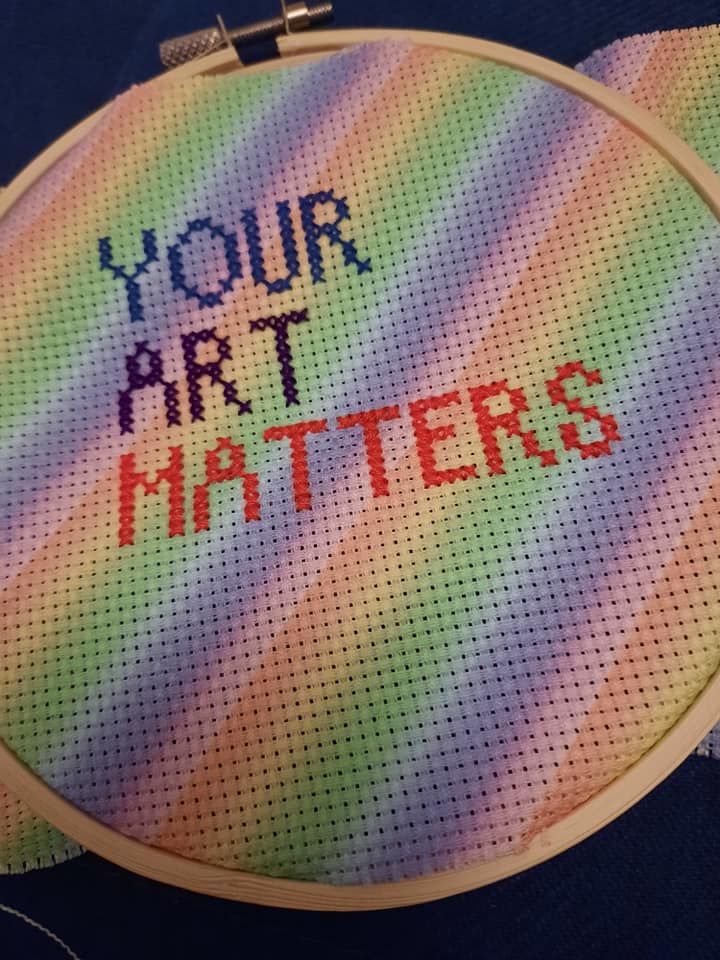
Spread so thin we disintegrate
We spread our time so thinly now, yet simultaneously squander it so freely. Too exhausted to do anything else, we give our fractured attention to a thousand strangers’ voices on the internet, absorb the minutest detail of a celebrities’ lives – often unintentionally, an osmosis it’s almost impossible to escape. But what are we crowding out with that attention? I effortlessly keep track of a wealth of pointless, often depressing facts, yet I have to leave myself notes to ensure I am fulfilling the most basic tenets of friendship. ‘Wish X a happy birthday’. ‘Ask Y about the test results’. ‘Message Z to see how the interview went.’ But hey, need me to tell you which cancelled show that actor was in for one episode? I’m your gal!
I hadn’t heard the word ‘parasocial’ until recently – the phenomenon where a fan feels they have a personal relationship with a celebrity – but perhaps it’s not surprising I now hear it all the time. It’s usually used to demonise overzealous fans (sometimes deservedly so – I spend a lot of time on Tumblr, and the conviction with which some people convince themselves they know intimate details of a famous stranger’s life is truly terrifying). But I often find myself falling prey to a diluted version of that same tendency. Hey, that theatre person liked my tweet; that crafter responded to me praising their product on my Instagram. That means we’re friends, right? So why are they ignoring me now?
Sometimes it feels like the internet, for all its fostering of connections, is mainly teaching us to love something that will never love us back.
The generosity of an audience
But all that said, I have increasingly come to believe that consuming someone’s art is a generous act. Taking the time to read someone’s book, go to see their show, even watch their TV show (hell, even listen to their song for 4 minutes), is giving that art the gift of your attention (and often money), in a world where both of those things are in increasingly short supply.
Nobody – almost nobody – creates work without wanting that work to reach an audience. So surely being that audience, even for a short time, is a generous gift, more so now than ever. Not a selfless act, of course – hopefully the audience gets something (at times an awful lot) out of the equation. But a generous one, nonetheless.
Arts criticism at its best is a generous act
I have a friend, a fellow critic I greatly admire, who regularly sits on a bus for four hours to go see a three-hour show. It’s a longstanding joke between us: I think everything should be 20 minutes shorter, she will happily sift through a lengthy epic to prise out a single strand of gold. I think, sometimes, that what I admire most isn’t the erudition of her writing, eloquent and informed though it is, but its generosity. That it’s that which I should seek to emulate. (Not the four-hour bus ride part, obviously. I have my limits).
The very act of giving time and attention to someone else’s art in a world where everyone is busy, tired and depleted is an inherently generous act. Even if it’s for your own pleasure and, yes, even if you’re being paid (trust me: pretty much nobody reviews theatre for the money.) I’ve long held that creating anything is an act of expansion, of generosity. Even if you get paid for it (even if you get paid very well!), even if you enjoy making it, even if your primary audience is yourself. But it’s only recently occurred to me that the act of giving someone else’s art your attention can be generous in itself.
Critics often get a bad press – occasionally well-deserved – but the ones I most admire are those who don’t just rattle off a review but give real thought to the art form they are critiquing. Who offer up compassion even for a ‘failed’ attempt, who will make the effort to find the creative intent in flawed, inchoate art rather than just be seduced by slick, glossy, overly packaged offerings. People who will spend evenings over wine picking something apart for why it’s good, why it’s bad, what it says about the world – sometimes even months after they’ve seen it, and only to an audience of friends. Maybe they didn’t like it. Maybe they even hated it. But they have given it headspace. Thought about it, even after the deadline has passed and the review is filed. Used it to inform their next review, their next opinion, how they judge the next thing they see out in the world. Honoured the artist who made it by giving it some of their time.
But also: what a luxury that time is. How few people are now allowed it.
A world where all artists are rich (and not in a good way)
I often think of all the working-class bands I grew up listening to. The way they honed their talents, explored their voices, so often supported by the dole. The dole gave them a safety net, freed them from jobs that would have drained their creative and – given the nature of many working-class jobs – their physical energy. Allowed them space to write, rehearse, perform. It gave them time. For less than the cost of a year’s unpaid corporation tax, the country funded a whole generation of artists. Many of whom floundered, sure, but some who would go on to pay back that investment a thousand times over. In taxes, in legacy, in international standing; in inspiring others to follow in their footsteps.
Who has that option now? People with posh parents or rich spouses. What the hell kind of art will we be left with if the only people who have the luxury of time to make it are those who are already rich in so much else? Some of that art will be good, I’m sure. Some of it might even be great. But none of it can fill those holes in a landscape where the less privileged have buried their dreams.
Age of impatience
Every woman I know – and yes, it is particularly women, socialised to service as we are – spends a disproportionate amount of time feeling guilty about what she is not doing, what she should be doing, even when she is busy doing something else. (With, as far as I can tell from a multitude of fraught conversations, motherhood multiplying that feeling by a million). None of us ever seem to get time to ourselves anymore. If we do, we so often don’t know how to use it.
I’m in my 50s. Every single day I feel the rising panic that I am running out of time. I have left it too late. Too late to be impactful in my art. Too late to start a pension, too late to buy a home (I mean, I’m probably right on those last ones). Too late to do… something. Anything. And too often instead of inspiring me to action, that feeling paralyses me in procrastination. I waste the time I do have, by wishing I had more.
Often the people with whom we are stingiest with our patience are ourselves, but it’s easy to see why: that pressure isn’t just internal. People need to pay their bills, and they need to pay them now. That often leaves little space for the luxury of creativity.
I regularly see artists in their 20s bemoaning they haven’t yet ‘made it’, feeling their time is already running out. The ‘hustle’ culture has bred a mindset that any moment not spent earning, self-promoting, getting out there and making money or connections is wasted. Late-stage capitalism and all of its demands has branded any time not spent productively (or at least in active consumption) as time squandered. While other countries experiment with universal basic income (sometimes just for artists, which is great, sometimes for everyone, which is better), the UK seems to be spiralling ever further into vitriol that demonises anyone outside the corporate world as greedy scroungers, and the arts as an unnecessary, even subversive, frivolity.
A requirement for not just profit but exorbitant profits means companies won’t ‘waste’ time on artists who could, if nurtured properly, pay off that investment many times over down the line. People are expected to be perfect and profitable straight out of the gate. Brutal cuts to arts funding mean that even those companies that do have an ethos of investing time and care developing artists are pushed painfully close to the wire, desperately stretched and having to make harsh choices about who they can support and how. Smaller theatres, publishers, magazines, music venues – all the places that people could gain experience and develop their craft – are closing down all of the time.
Where does this leave life’s late bloomers, or those who need years of support and development to hone their crafts? How many masterpieces are never being made, because they or their creators can’t be rushed? How much poorer does that leave us all? And are we running out of time to fix it?
Like my writing? You can support me in a whole load of ways (some of them for FREE!)
If you’re skint: RTs and shares always welcome. Reviews of anything of mine you have read on Amazon or Goodreads or any book related/social media site, no matter how short, help boost profile. Tell your friends how lovely I am.
You can also sign up to my new Substack, which is free!
Donate to my Ko-fi. Or become a paid subscriber to my Substack!
Buy my books (some currently only 99p on Kindle)
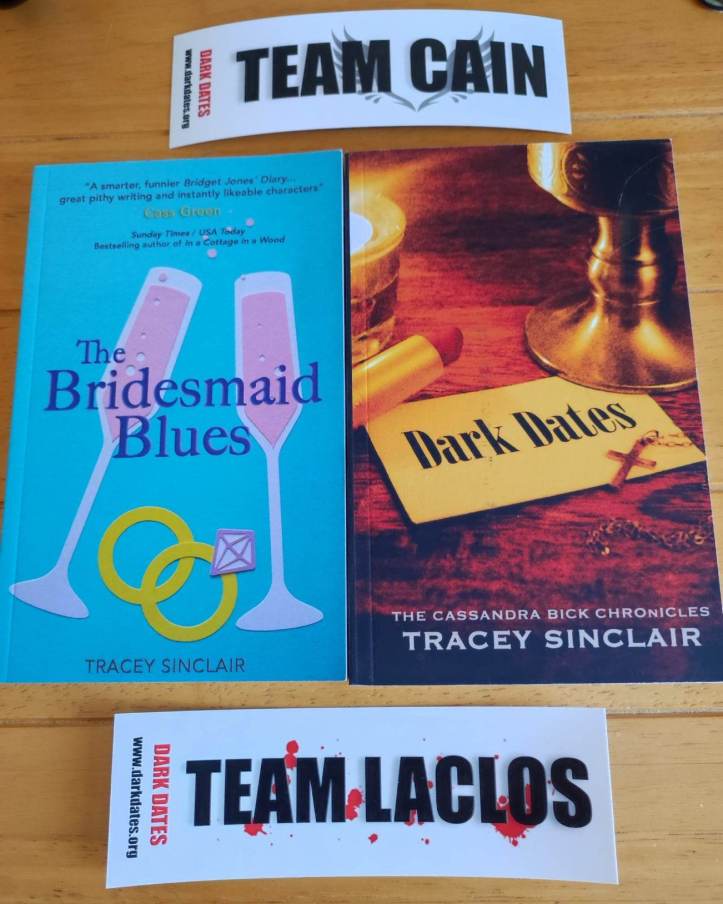
Rom-com with a dash of Northern charm: The Bridesmaid Blues
Paranormal adventure with snark and sexiness: Dark Dates: Cassandra Bick Chronicles: Volume 1
If you want to read something a bit darker, try my earlier novel Doll and my short stories No Love is This.
Want some swag? Buy a bag or a tee. And be sure to send me a picture!
 ProdigalGeordie